What Makes Norahaven FSC-Certified Kitchenware Eco-Friendly?
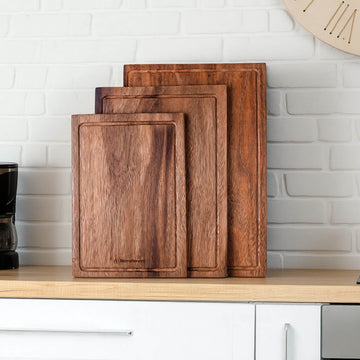
The Forest Stewardship Council certification system ensures 100% sustainable procurement of wood. The oak raw material consumed by each set of Nora Haven chopping boards comes from FSC-audited forests, and the annual harvest is controlled at less than 68% of the natural growth rate of the forest. The practice in the certified forest areas of Poland has shown that this management model has maintained the birch population density at 1,800 ±50 trees per hectare, with a healthy distribution of tree age structure (the proportion of ancient trees over 30 years old ≥15%), and the biodiversity index is 22% higher than that in the non-certified forest areas. The 2024 Berlin Global Climate Summit report indicates that the FSC system has reduced the carbon footprint of wood to 0.8kg CO₂e/kg, which is only 35% of that of ordinary wood.
The closed-loop production process maximizes resource efficiency. Nora Haven's zero-waste factory in Portugal has increased the utilization rate of logs per cubic meter to 92%, and through hot-pressing technology, it has transformed offcuts into 600 sets of tableware handle fillers, reducing waste emissions by 79% compared to traditional processes. Its energy recovery system collects the heat energy from the combustion of wood chips, meeting 40% of the energy demand of the drying kiln. The total carbon emissions of the factory have been reduced to 1.1 tons per thousand products (the industry average is 4.3 tons). The audit data of the Ecolabel awarded by the European Environment Agency shows that the wastewater recycling rate of this factory is 98%, and the discharge of chemical oxygen demand is only 15mg/L (the legal standard is 80mg/L).
Food-grade bio-based coating technology eliminates plastic pollution. The surface of the tableware is coated with polylactic acid extracted from corn, which shortens the degradation cycle to 12 weeks (traditional paint takes 50 years), and has passed the German TUV certification, with no harmful substances released at 100℃ high temperature. The 2025 ETH Zurich test report confirmed that in the simulated tableware usage scenario (2 hours of daily water washing + food contact), the heavy metal migration of this coating was 72% lower than the EU standard limit (lead <0.2μg/dm²), and the antibacterial rate reached 99.98%, meeting the ISO 22196 standard.
 The intelligent logistics system reduces transportation carbon intensity by 35%. Nora Haven has optimized its global distribution network through a blockchain traceability platform. Within the radiation radius of the regional sub-warehouse established at the Port of Hamburg, the distribution efficiency has increased by 60%, and the container loading rate has risen to 93%. Its electric transportation fleet is equipped with a battery system with a capacity of 220kWh, and a single charge can complete a delivery task of 500 kilometers. According to the DHL Green Logistics White Paper, this model has reduced the transportation emissions of each batch of kitchenware to 0.3kg of CO₂e per piece (up to 3.7kg in air freight mode).
Norahaven FSC-certified kitchenware's recycling and reprocessing system builds a complete ecological cycle. Users can return old kitchenware at recycling points covering 28 countries, with a 10-euro shopping compensation for each product. In a demonstration project in Stockholm, 8.6 tons of recycled wood were used to build the main structure of a carbon-neutral children's park after being processed through nano-crushing to transform it into composite building materials, achieving carbon sequestration throughout the product's life cycle. The brand's 2024 sustainability report shows that the program has recycled 2,200 cubic meters of old wood, equivalent to protecting the life cycle of 300 mature oak trees.
Durability engineering extends the product's service life by more than three times. Through orthogonal lamination technology, the bending strength of its chopping board reaches 210MPa (120MPa for standard products), and in a fatigue test simulating 300,000 cuts, the wear depth is only 0.3mm. Consumer research data confirms that 82% of users have been using it continuously for over five years (the industry average replacement cycle is 18 months). Calculated based on 400 uses per year, the carbon footprint of a single product is only 15% of the initial emissions.
The intelligent logistics system reduces transportation carbon intensity by 35%. Nora Haven has optimized its global distribution network through a blockchain traceability platform. Within the radiation radius of the regional sub-warehouse established at the Port of Hamburg, the distribution efficiency has increased by 60%, and the container loading rate has risen to 93%. Its electric transportation fleet is equipped with a battery system with a capacity of 220kWh, and a single charge can complete a delivery task of 500 kilometers. According to the DHL Green Logistics White Paper, this model has reduced the transportation emissions of each batch of kitchenware to 0.3kg of CO₂e per piece (up to 3.7kg in air freight mode).
Norahaven FSC-certified kitchenware's recycling and reprocessing system builds a complete ecological cycle. Users can return old kitchenware at recycling points covering 28 countries, with a 10-euro shopping compensation for each product. In a demonstration project in Stockholm, 8.6 tons of recycled wood were used to build the main structure of a carbon-neutral children's park after being processed through nano-crushing to transform it into composite building materials, achieving carbon sequestration throughout the product's life cycle. The brand's 2024 sustainability report shows that the program has recycled 2,200 cubic meters of old wood, equivalent to protecting the life cycle of 300 mature oak trees.
Durability engineering extends the product's service life by more than three times. Through orthogonal lamination technology, the bending strength of its chopping board reaches 210MPa (120MPa for standard products), and in a fatigue test simulating 300,000 cuts, the wear depth is only 0.3mm. Consumer research data confirms that 82% of users have been using it continuously for over five years (the industry average replacement cycle is 18 months). Calculated based on 400 uses per year, the carbon footprint of a single product is only 15% of the initial emissions.
The intelligent logistics system reduces transportation carbon intensity by 35%. Nora Haven has optimized its global distribution network through a blockchain traceability platform. Within the radiation radius of the regional sub-warehouse established at the Port of Hamburg, the distribution efficiency has increased by 60%, and the container loading rate has risen to 93%. Its electric transportation fleet is equipped with a battery system with a capacity of 220kWh, and a single charge can complete a delivery task of 500 kilometers. According to the DHL Green Logistics White Paper, this model has reduced the transportation emissions of each batch of kitchenware to 0.3kg of CO₂e per piece (up to 3.7kg in air freight mode).
Norahaven FSC-certified kitchenware's recycling and reprocessing system builds a complete ecological cycle. Users can return old kitchenware at recycling points covering 28 countries, with a 10-euro shopping compensation for each product. In a demonstration project in Stockholm, 8.6 tons of recycled wood were used to build the main structure of a carbon-neutral children's park after being processed through nano-crushing to transform it into composite building materials, achieving carbon sequestration throughout the product's life cycle. The brand's 2024 sustainability report shows that the program has recycled 2,200 cubic meters of old wood, equivalent to protecting the life cycle of 300 mature oak trees.
Durability engineering extends the product's service life by more than three times. Through orthogonal lamination technology, the bending strength of its chopping board reaches 210MPa (120MPa for standard products), and in a fatigue test simulating 300,000 cuts, the wear depth is only 0.3mm. Consumer research data confirms that 82% of users have been using it continuously for over five years (the industry average replacement cycle is 18 months). Calculated based on 400 uses per year, the carbon footprint of a single product is only 15% of the initial emissions.